Who are the Huichol people? Wixárika culture and spirituality
Learn about the history, traditions, and worldview of the Huichol people, guardians of peyote and creators of Wixárika art, one of the most vibrant cultures in Mexico.
Origin and territory
The huicholes, also called Wixárika, They primarily inhabit the Sierra Madre Occidental mountain range, in the states of Jalisco, Nayarit, Zacatecas, and Durango. Their geographic isolation has allowed them to preserve ancestral customs and a unique cultural identity that has withstood the test of time.
Identity and worldview
The Wixárika people refer to themselves as Wirrárrica o Wirraritari. Their worldview is marked by sacred symbols such as the peyotethe blue deerthe corn and the sun, which appear constantly in their art and rituals. For them, the world is divided into three planes: the mythical, the agricultural, and the spiritual, all interconnected in their daily life.
Ritual art and spirituality
The Huichol art It is not only aesthetic, but a form of writing and communication with the divine. Through pieces made with beads and yarn, the Huichol people narrate myths, prayers, and visionary experiences. Nierika, considered “the gift of seeing”, is a spiritual portal that connects the shaman (mara'akame) with the deities.
Crafts and artistic expressions
Among the most representative pieces are:
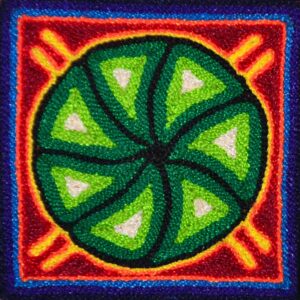
- Yarn boards (Nierikas): windows to the mystical Wixárika world.
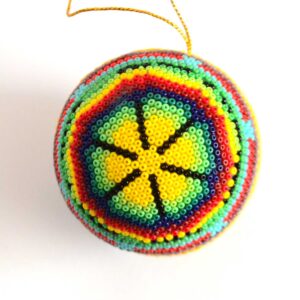
- Figures covered in beads: animals and symbols charged with spirituality.
- Beaded and micro-beaded accessories: necklaces, bracelets and breastplates of great beauty.
- Yarn paints: visual narratives that convey stories and legends.
Each work is a testament to the Huichol cosmogony and their cultural resistance.
Religion and shamanic practices
The Huichol religion is deeply linked to visionary experience. mara'akate They perform healing rituals and communicate with the gods, using feathers, tobacco smoke, and the Nierika as sacred instruments. These practices strengthen the connection between the spiritual and everyday worlds.
Legends and mythology
One of the best-known legends tells of the birth of Sun, This myth arose after the sacrifice of a child sent by the Moon. It explains the struggle between light and darkness, and even today the Huichol people make offerings to the animals that defended the Sun on its first journey across the sky.
Daily life and productive activities
In addition to selling handicrafts, the Huichol people practice agriculture, hunting, and fishing. Their main crops are corn, beans, squash, and chili peppers, cultivated on communal lands using traditional techniques. They have settlements in Tepic, Fresnillo, and Guadalajara, although many migrate seasonally between regions.
Art as cosmogony
Huichol art possesses a cosmogonic dimension. Each piece is a story of the origin of the world and the relationship between the gods and humankind. yarn paintings Created by the mara'akate, they narrate everyday events and mystical visions, becoming authentic windows to the beginning of time.
Art is not limited to commercial purposes: many pieces are created to narrate religious experiences and transmit the Wixárika worldview.
The ancient legend
The Huichol legend tells how, in the beginning of time, there was no light in the world but that of the moon, which was a great inconvenience for man. The elders and those who possessed knowledge then gathered to discuss how to bring more light into the world, they begged the moon to send them her only son, a lame and one-eyed boy. At first the Moon objected, but in the end gave her consent. Then, they dressed the boy in ceremonial clothes, consisting of huaraches (sandals), feathers, and bags to keep tobacco; then they gave him a bow and arrows as a weapon and painted his face, and then threw him into a furnace, where the fire consumed him completely. However, the child was resurrected and ran under the earth, and to everyone's astonishment: five days later, the Sun appeared. When the Sun spread its light on the earth, all the nocturnal animals (jaguars and mountain lions, coyotes, foxes and snakes) were greatly disturbed and shot their arrows at the day star.
The heat and rays of the Sun were intense and blinded the animals of the night, forcing them to hide in dark caves, puddles and trees; had it not been for the squirrel and the "pitorreal", the Sun would not have been able to complete its first journey across the sky. These were the only two animals that defended the Sun; they would rather have given their lives than allow the Sun to die, and at sunset they left some "tesguino" in sight so that the Sun could pass. The jaguars and wolves killed the squirrel and the pitorreal in the end, but, even to this day, the Huicholes make offerings to these heroes and call the squirrel "Father".
The Huichol people are one of the most vibrant and resilient cultures in Mexico. Their art, spirituality, and worldview continue to transmit an ancestral message that connects humankind with nature and the divine.
Discover how each yarn figure or table reflects the Wixárika worldview. Unique works that unite tradition, spirituality, and Mexican art.
Explore our Huichol Art Figures, Yarn Paintings, and Jewelry