
Chaquira - The perfect jewel.
04/01/2023
Chaquira - The perfect jewel
Why do the Wixarika use so much yarn and chaquira in ritual art and crafts, why are these applications glued with wax, and what is "mitote"?
Materials such as wax, chaquira, wool and cotton sacralize ceremonial objects and offerings. We do not know the meaning of the word Wixarika, but we know that "Huichol" is a Spanish version of this term. The language spoken by the Wixarika belongs to the branch known as Cora-Huichol, within the Yuto-Nahuas language family. The Huicholes, who live isolated in the western Sierra Madre between the states of Jalisco, Nayarit and part of Durango and Zacatecas, begin to express themselves artistically from their clothing and dress with incredible elegance.
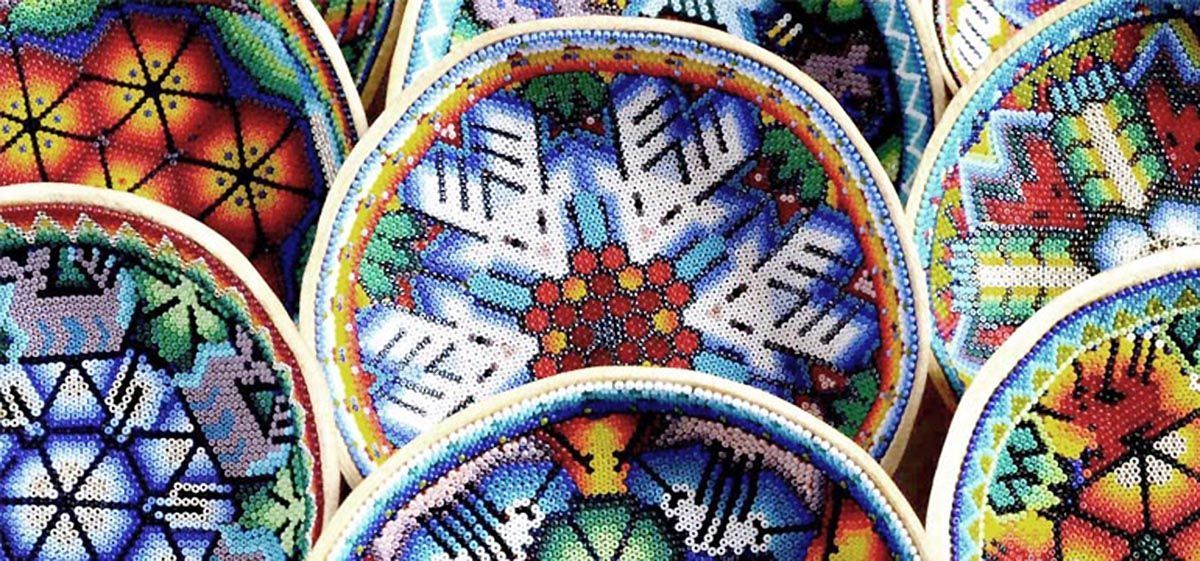
The chaquira (kuka), for example, is a symbol of water; that is why it covers the inner surface of the jícaras, which are the water containers par excellence. The observations that arose at the end of the XIX century, about certain type of Huichol ritual objects jicaras (xukurite) and statuettes of stone or wood that represent deified ancestors, indicate that already in that time they used glass beads in their decoration, "it is undoubtedly that before they used shells of mollusks with this purpose", allows us to infer that the chaquira is not a material of recent incorporation to the art of the Huichols. The chronicle of Father José Arlegui, dating from 1737, describes the destruction of a Huichol ceremonial center where objects made with beads were found. Today, the chaquira is sacred among the Wixaritari "chaquira means life". These small colored beads are also compared to corn seeds, and are the object of ritual uses, which can be for purification.
Eyes of God
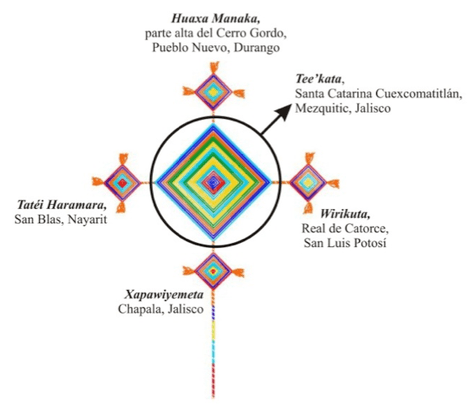
The Tsikuri or god's eye consists of a worsted rhombus whose structure is made of two small crossed rods, each rhombus symbolizing a year of protection. Studies on worsted pictures almost always deal with their iconography. However, they also carry symbolism as textile pieces. The cosmogonic mythology of the Great Nayar tells that the world is a fabric made from the hair of the primordial goddess. This divinity, equivalent to the Spider Woman, wove it in the shape of a rhombus (tsikuri), and her children danced mitote on it to widen it. In fact, all mitote-type dances can be interpreted as updates of this myth. The backstrap looms used by Huichol weavers are, in this context, models of the sacred landscape, organized along two axes, the solstitial and the equinoctial: the warp threads represent the pilgrimage path leading from the place of origin in the west, the Pacific Ocean, to the place of dawn, the desert of Wirikuta, in the east. The threads of the weft, apparently, are related to the annual north-south movement of the diurnal star.
In this context, we can also explain the importance of wax. According to the myth, the first mitote singer was Tsitsikame, the Bee Person. When he was killed by his envious brother-in-law, the Heron Person, his eyes were transformed into the first bees (xiete). Other parts of his body became the favorite plants of these insects, while the sound of his musical bow lives on in the buzzing of the diligent honey producers.
Why do the Wixarika use so much yarn and chaquira in ritual art and crafts, why are these applications glued with wax, and what is "mitote"?
When celebrating the initiation of newborn children, the path of the pilgrimage is symbolized, along the festive patio, with a thread that connects the drum of the cantador, seated in the center, with the altar located to the east, which represents the Cerro del Amanecer (Hill of Dawn). The children identify themselves with the cotton flakes and walk the thread according to the narration of the cantador, who describes in detail each of the places where they must pass towards the sunrise.
Pilgrimage routes are also represented with threads or ropes in other contexts. The same jicareros of the ceremonial centers (tukipa) use a rope with knots that symbolize the seasons of the journey to Wirikuta. On the other hand, the term the Huichol use to refer to their cosmogonic myths is kawitu, "the path of the caterpillar" (kawi), which guides the pilgrims. At the end of the path, the caterpillar transforms into a butterfly, just as the initiates transform into initiates. Among the initiates, the kawiterutsixi are the ones who know the myths and pilgrimage routes best. Chanting kawitu is equivalent to walking the pilgrimage routes, practicing cosmogonic self-sacrifice, that is, creating the world. Therefore, the world can be thought of as a weaving (a warp) of ritual texts. If we take into account that the scenes represented in the Huichol tablets are episodes of the kawitus, we can appreciate that in Huichol art the threads (the strings) are routes and myths, and the world is like a weaving. Thus, it is no coincidence that these pieces are made precisely with yarn.
-
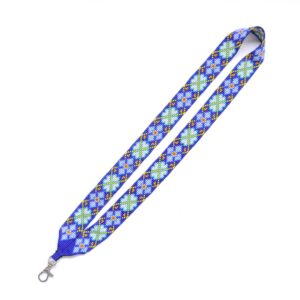
Portagefete | Huichol
AHAR 00307MX$ 750.00Handmade beaded badge holder | Blue Huichol design and...Add to cart -
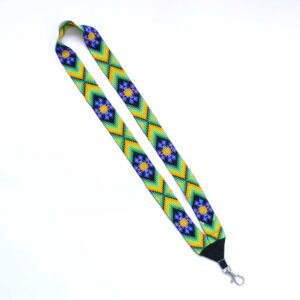
Portagefete | Huichol
AHAR 00303MX$ 750.00Discover the handcrafted beaded badge holder with a unique design...Add to cart -
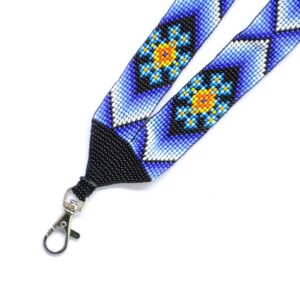
Badge holder | Huichol
AHAR 00302MX$ 750.00Beaded badge holder with geometric pattern in various shades...Add to cart -
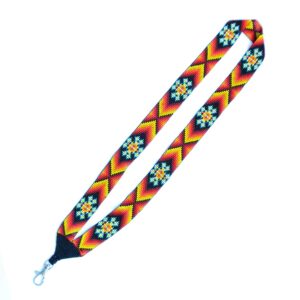
Badge holder | Huichol
AHAR 00301MX$ 750.00Beaded badge holder with geometric pattern in various shades...Add to cart -

worsted board | 120 x 120 cms
AHC 00605MX$ 27,500.00A "tabla de estambre Huichol" is a tool for...Add to cart -

worsted board | 120 x 120 cms
AHC 00604MX$ 30,000.00A "tabla de estambre Huichol" is a tool for...Add to cart -
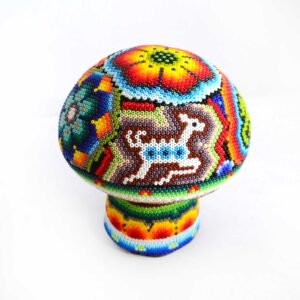
Huichol Art Mushroom
AHF 00314MX$ 1,270.00Huichol Mushroom: Mexican Beadwork Art...Add to cart -
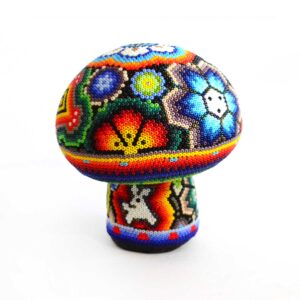
Mushroom – Fungus – Huichol
AHF 00313MX$ 1,270.00Discover the mushroom adorned with Huichol art, a...Add to cart -
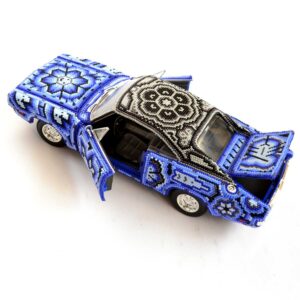
1969 Dodge Charger
AHF 00551MX$ 3,700.001969 Dodge Charger customized with Huichol art —...Add to cart -
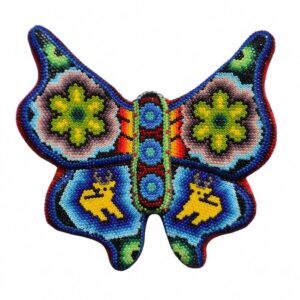
Huichol Art Butterfly
AHF 00238MX$ 1,300.00Discover the meaning of the Huichol art butterfly,...Add to cart -
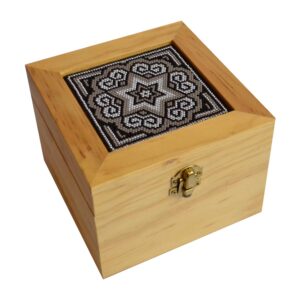
Box / Chaquira board
AHAR 00806MX$ 990.00A box with a huichol chaquira board is a piece of...Add to cart -
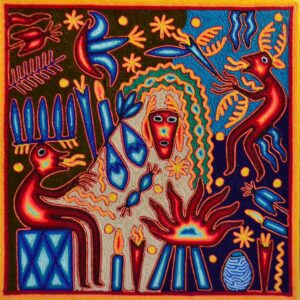
Yarn painting: 40 cms
AHC 00411MX$ 3,300.00The "tablas de estambre huichol" are works of art...Add to cart -
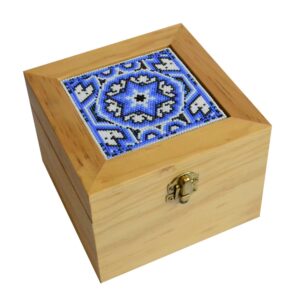
Box / Chaquira board
AHAR 00851MX$ 990.00A box with a huichol chaquira board is a piece of...Add to cart -
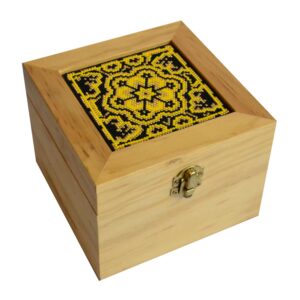
Box / Chaquira board
AHAR 00807MX$ 990.00A box with a huichol chaquira board is a piece of...Add to cart
